GJALLARHORN — THE SILENCE BEFORE RAGNARÖK
Every mythology gives its ending a sign. A trumpet. A flood. A darkness over the sun.
The Norse gave theirs a sound — one blast of one horn, so loud it would be heard in all nine worlds at once. Every god, every giant, every living and dead thing would know, in the same instant, that the end had begun.
That sound has a name: Gjallarhorn.
And the most important thing about it is this — it has not sounded yet.
THE BRIDGE AND ITS WATCHMAN
Between the world of men and the realm of the gods stands Bifröst — the burning rainbow bridge, three-coloured, built stronger than any structure ever raised, and still fated to break.
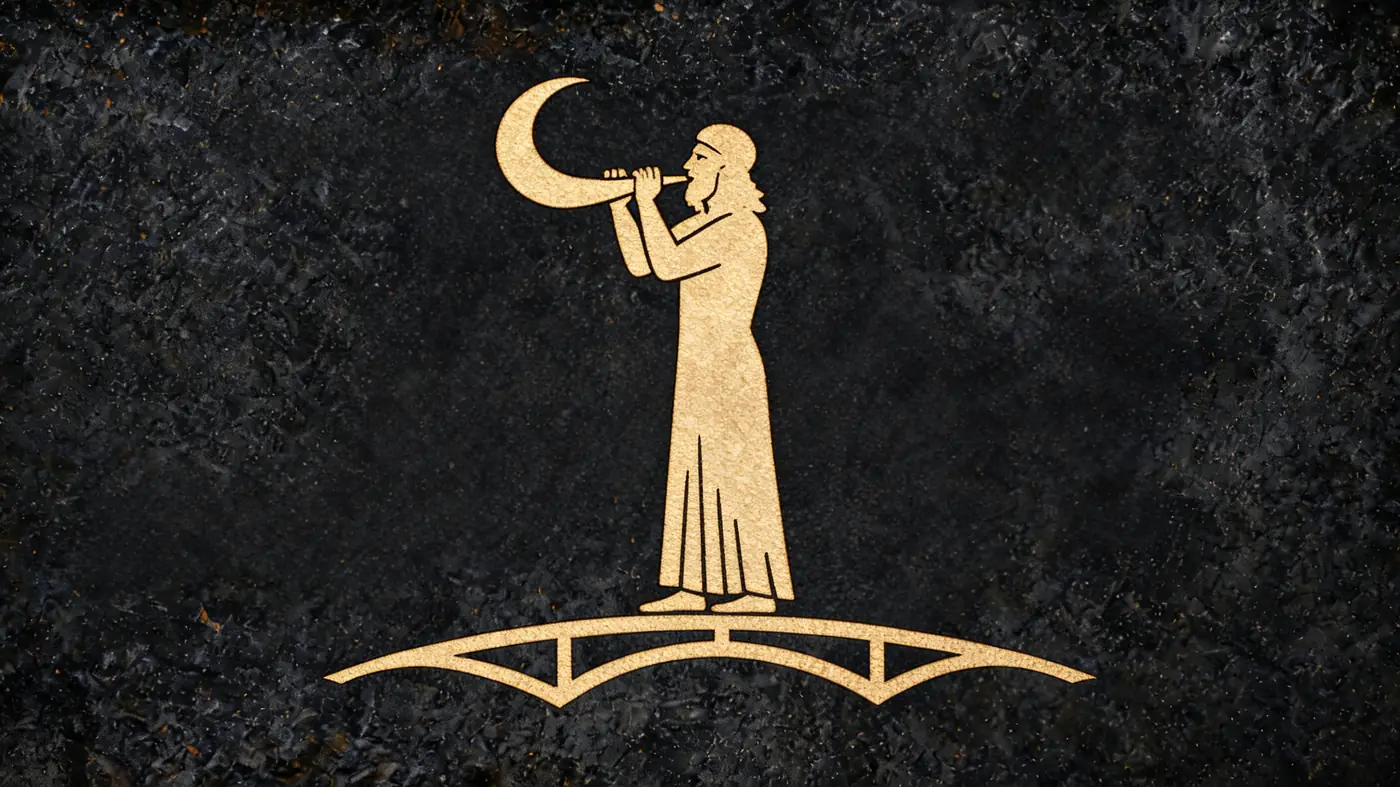
At its highest end, where the bridge touches the sky, stands a single figure. His hall is Himinbjörg — “Heaven’s Cliffs.” His name is Heimdallr, and he is the watchman of the gods.
The Norse did not make him a warrior first. They made him a sense. Born of nine mothers, gold-toothed, he needs less sleep than a bird. He sees a hundred leagues by night as well as by day. And he hears everything — the grass growing in the fields of Midgard, the wool rising on a sheep’s back. Nothing approaches the bridge that he does not know about first.
The gods gave their sharpest senses to one duty: stand at the edge, watch the horizon, and when the sons of destruction finally come — sound the horn.
One duty. One signal. An eternity of silence before it.
THE HORN THAT ENDS THE WORLD
Gjallarhorn means “the resounding horn” — the horn that rings out. It exists for exactly one note.
The old poems treat it with strange reverence. In the Völuspá, the seeress lists it among the signs of the end: the sons of Mím are at play, fate catches fire, and Heimdallr raises the horn high. In some tellings it waits beside Mímir’s well, beneath a root of the World Tree, where wisdom itself is kept — as if the Norse understood that the announcement of the end and the deepest knowledge belong in the same place.
Other horns call men to feast or to battle. Gjallarhorn calls worlds. When it finally sounds, it will not be a warning. Warnings can be heeded. This is a verdict — the single note that divides everything that ever happened into before and after.
Which is why its silence is the loudest thing in Norse mythology.
WHAT HAPPENS WHEN IT SOUNDS
The moment the horn is blown, everything the gods feared arrives at once.
Fenrir breaks his chain. The World Serpent heaves out of the sea. The ship of the dead slips its moorings. Fire from the south, frost-giants from the east — and Bifröst, the bridge built stronger than anything, shatters under the weight of the riders crossing it.
Odin rides to the wolf and dies. Thor kills the serpent and falls nine steps later. And Heimdallr — the watchman who announced it all — meets Loki at the end of the field, and they kill each other. The one who watched everything, and the one who deceived everyone, cancelling each other out at the world’s last hour.
Heimdallr knows all of this in advance. That is the terrible part of his duty. The horn in his keeping is not just the alarm for the end of the world. It is the opening note of his own death — and he will blow it without hesitation when the moment comes.
THE MOMENT BEFORE
Myth remembers the blast. It rarely honours the silence before it.
But think about where the watchman actually lives. Not in the battle — that lasts a day. He lives in the waiting: ages upon ages at the cold end of the bridge, hearing the grass grow, hearing the wool rise, hearing — beneath all of it, growing louder every century — the sound of the thing that is coming.
He sees the first crack run through Bifröst’s light. He knows what it means before any god in Asgard. And he does not sound the horn.
Not yet.
Not out of fear — fear is not in him. Out of precision. A watchman who sounds the alarm early is just another voice of panic. The entire worth of his eternity of watching comes down to choosing the exact moment, and no one may choose it for him. The bridge is breaking, the light is falling, and the horn stays down, runes waiting, cord at rest — because the one who holds it is still in control.
The end will be announced once. Until then, silence is the duty.
WHAT THE UNBLOWN HORN ACTUALLY MEANS
Strip away the bridge and the burning sky, and the unblown horn is a question about power: what is stronger — the blast, or the hand that withholds it?
Anyone can announce. Anyone can panic, react, sound off at the first crack in the light. The Norse put their most perceptive god — the one who hears everything, misses nothing — in the one role that demands he say nothing, for ages, while knowing exactly how it all ends. His restraint is not passivity. It is the last form of control: the certainty that when he finally speaks, it will matter absolutely, precisely because he did not speak before.
Some announce. Some endure.
The watchman knows. He has not spoken yet.
THE NEOLITHIC CONNECTION
At Neolithic Store, The Unblown Horn is the piece in our Norse Saga collection for those who understand that the held breath commands more than the shout.
The Unblown Horn tee carries the longest moment in Norse myth on Bone White. The front holds an oxblood triangle — three strokes locked into one, the knot still holding at the chest. The back carries the truth the watchman already knows: Bifröst torn open in oxblood, and Gjallarhorn curving up out of it, silent, runes carved deep, waiting for the breath that has not come.
The bridge is breaking.
The horn has not sounded. We put that silence on bone.
Available now at neolithicstore.com.
Forged from ancient bloodline. Worn by the modern warrior.
Neolithic Store is a premium mythology-inspired streetwear brand rooted in the stories that shaped human civilization. Every design begins with research, every piece carries a story, and every stitch is made for those who wear their beliefs on their skin.
[…] Heimdallr hears grass grow in distant fields, and he holds one duty: when the end comes, blow the horn. The design is the moment before. On the back Bifröst is torn open in oxblood, and Gjallarhorn curves up out of it, silent, runes waiting for breath that has not come. The chest carries an oxblood triangle, three strokes locked into one. The axis, still holding.See the design · Read the story […]