 CLICK TO ZOOM
Nefertari is 5'7" and wearing Size L
HE WRITES THE VERDICT.
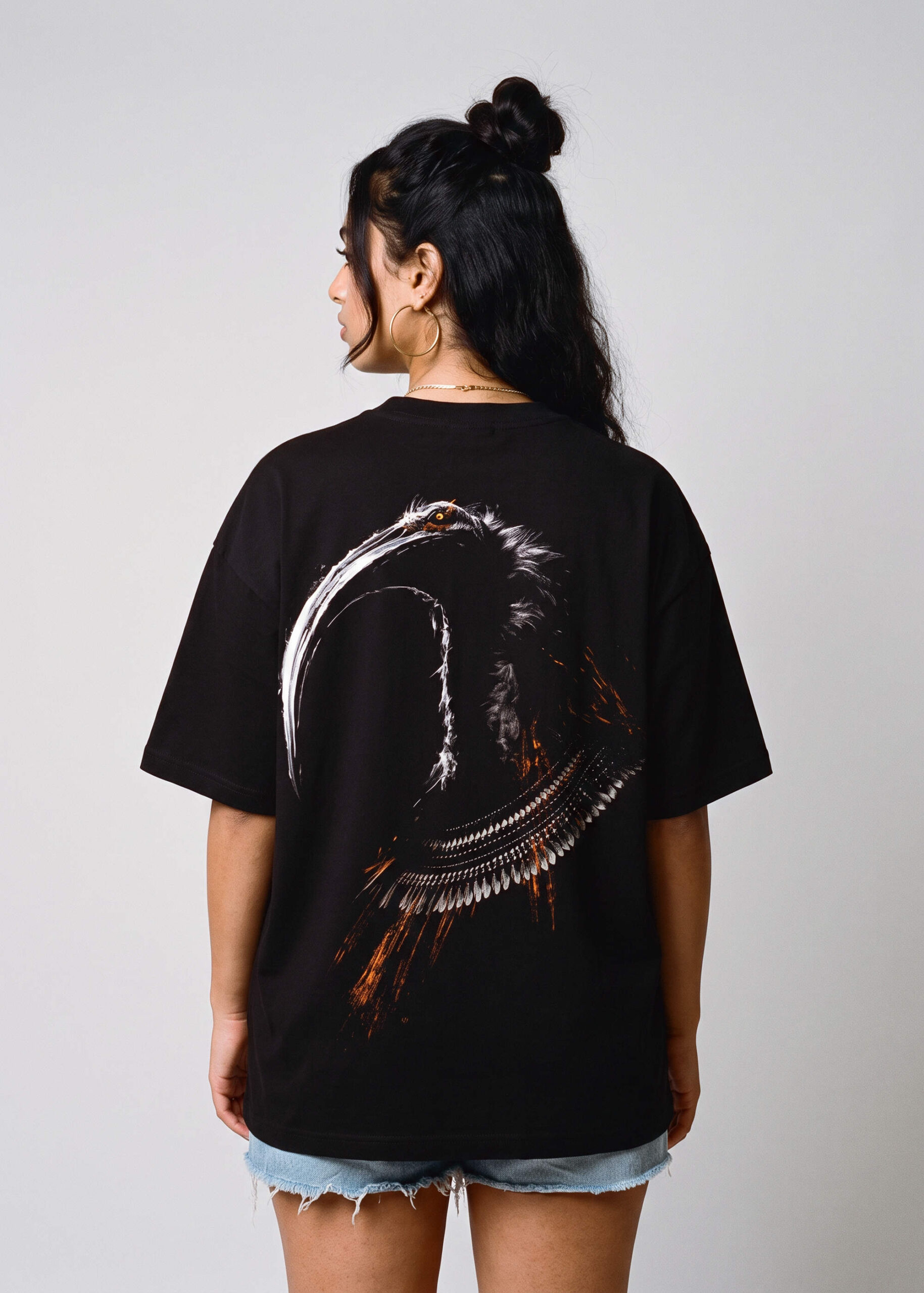
In Egypt, a thing was true when it was written, and the god who wrote it was an ibis. The back carries Thoth drawn almost entirely from shadow: one white crescent beak, one orange eye, a collar of silver feathers, and orange ink running down the black.
The Story
His name was Djehuty. The Greeks called him Thoth, and Hermes. He had the head of an ibis, whose long curved beak looks like the crescent moon, and so he was the god of the moon and of everything the moon counts: months, years, the calendar.
He was also the god who gave Egypt writing. Hieroglyphs were “the words of the god,” and scribes offered him a few drops of water from their ink before they began. At his city of Hermopolis he was worshipped as the keeper of wisdom, and in catacombs at Saqqara and Tuna el-Gebel, Egypt buried more than a million ibises in his name.
His most serious work was done after death. In the Hall of Two Truths, the heart is weighed against the feather of Ma’at while Anubis tends the scale. Thoth stands at the end of it with a reed pen and writes down the result. He does not judge. He records, and what he records is final.
The back print is the ibis, drawn out of shadow: a single sweep of white for the beak, a small orange eye, spiked grey-white feathers on the head, a broad collar of silver and dark feathers curving across the lower back, and orange brushwork running down below it like embers of ink. Most of the figure fades into the black fabric.
The last word is his.
The Details
Care
Machine wash cold, inside out, with similar colours. Do not bleach. Do not tumble dry. Iron on reverse if needed. The fabric softens with each wash but holds its form.
Shipping & Returns
Free shipping across India. Dispatched within 1-2 business days. 7-day return window from delivery. Item must be unworn, unwashed, with tags intact.
No marks yet. The first carving is always the deepest.

Reviews
There are no reviews yet.