YAXCHÉ – THE SACRED CEIBA TREE

Before the Maya built their first pyramid, before they carved their first glyph, before they mapped the movement of Venus across the night sky — they stood beneath a tree and understood something that would define their entire civilization.
The world had a center.
And it was alive.
THE TREE AT THE AXIS OF EVERYTHING
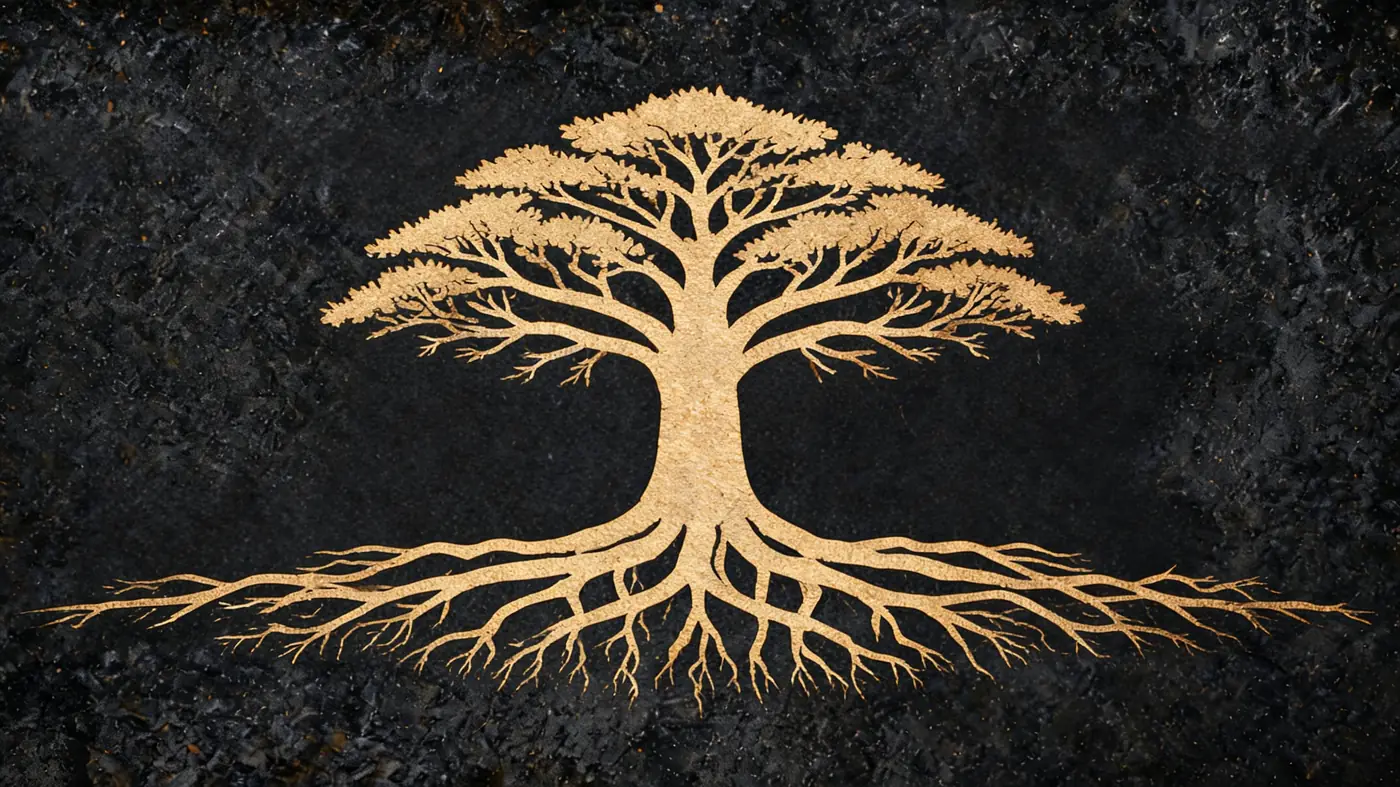
Indeed, the Ceiba tree — known in Kʼicheʼ Maya as Yaxché, meaning First Tree or Green Tree — was not simply the most sacred tree in Maya cosmology. It was the structural foundation of the entire universe.
Notably, in the Maya worldview, existence was not flat. It was vertical. Three realms stacked upon each other in a cosmic column — the underworld below, the living world in the middle, the heavens above. Thirteen layers of sky ascending upward. Nine layers of underworld descending below. And at the center of it all, connecting every layer to every other layer, running from the deepest darkness of Xibalba to the highest throne of the gods — the Ceiba.
In fact, the Maya called this the World Tree. The axis mundi. The spine of creation.
Indeed, without it, the three realms would collapse into each other. The dead would flood the living world. The heavens would fall. Time itself would lose its direction.
Remarkably, the Ceiba did not hold the world together by force. It held it together by simply being what it was — rooted in death, alive in the present, reaching toward the divine. A single organism spanning the entire distance between the underworld and the cosmos.
WHAT THE CEIBA ACTUALLY LOOKS LIKE
To understand why the Maya chose the Ceiba, you have to see one.
The Ceiba pentandra is one of the tallest trees in the tropical Americas — reaching heights of 70 meters in the dense jungle canopy of Central America and the Yucatán Peninsula. Its trunk is massive, often wider than several men standing arm in arm, covered in thick grey bark that develops sharp conical spines in its younger years — giving it an almost armored, supernatural appearance.
Furthermore, at its base, the Ceiba develops enormous buttress roots — wide, flat, dramatic extensions of the trunk that spread outward across the forest floor like the fingers of a buried giant. These roots are so large and so visually commanding that standing at the base of a mature Ceiba feels less like standing next to a tree and more like standing at the entrance to something ancient and powerful.
Its canopy spreads wide and flat at the top — a vast horizontal platform of branches and leaves that towers above the surrounding jungle, catching the first light of dawn before anything else below it.
Moreover, its sap runs red.
The Ceiba produces a dark crimson resin that bleeds from wounds in its bark — a visceral, startling detail that the Maya would not have missed. A tree that bleeds. A tree that towers above everything. A tree whose roots grip the earth with terrifying strength. Of course it was sacred. Of course it was the center of the universe.
THE THREE REALMS OF THE CEIBA
In fact, the Maya organized the Ceiba’s cosmological role into three distinct vertical zones — each corresponding to a different realm of existence.
The Roots — Xibalba
The roots of the Ceiba descended into the underworld. In Maya cosmology, Xibalba — the Place of Fear — existed directly below the surface of the earth. Not in some distant afterlife location but immediately beneath the ground where the living walked every day. The boundary between the living world and Xibalba was the earth itself.
Furthermore, the Ceiba’s roots penetrated that boundary deliberately. They fed in the underworld. They drew nutrients from the realm of the dead and carried them upward into the living world. The Maya understood this as a sacred exchange — the dead nourishing the living through the intermediary of the World Tree.
Indeed, the skulls cradled in the roots of the Ceiba in Maya iconography are not morbid decoration. They are a theological statement. The honored dead belong to the roots. They feed the tree. The tree feeds the world.
The Trunk — The Living World
The trunk of the Ceiba stood in the world of the living — the middleworld, the realm of human existence, agriculture, civilization, and time. The Maya built their cities with the Ceiba at the center. Major ceremonial plazas were oriented around sacred Ceiba trees. Kings conducted their most important rituals beneath the World Tree’s canopy. The living world was not separate from the cosmic order — it was the trunk of it.
The bark of the Ceiba, scarred and bleeding red, represented the texture of human experience. Difficult. Marked. Alive despite everything.
The Branches — The Thirteen Heavens
The branches of the Ceiba reached upward through thirteen layers of sky into the realm of the gods. The highest layer was the throne of Itzamná — the supreme creator deity of the Maya — and the home of the cosmic bird Itzam-Ye, who perched at the very top of the World Tree and observed everything below.
The branches did not merely touch the heavens. They were the pathway to them. The souls of the righteous dead were believed to ascend the World Tree — moving upward from the roots of Xibalba, through the trunk of the living world, into the branches of the heavens. Not a metaphorical ascension. A literal climb up the spine of the cosmos.
THE CEIBA IN MAYA RITUAL AND PRACTICE
The cosmological significance of the Ceiba was not confined to mythology. It shaped every aspect of Maya life.
Architecture: Maya cities were laid out with four sacred Ceiba trees at the cardinal directions — north, south, east, and west — and a fifth at the center. The central Ceiba represented the World Tree itself. The four directional trees represented the cosmic Ceibas that stood at the corners of the universe, holding the sky in place.
Burial: The Maya buried their dead between the roots of Ceiba trees. This was not merely convenience. It was theology. To be buried in the roots was to be placed at the entrance to Xibalba — to begin the soul’s journey through the underworld toward eventual resurrection. The roots were the doorway.
Ritual: Major Maya ceremonies were conducted at the base of sacred Ceiba trees. The bleeding red sap of the Ceiba was associated with the blood sacrifices that the Maya believed sustained the cosmic order. The tree bled so the universe could continue.
Time: The Maya Long Count calendar — one of the most sophisticated timekeeping systems ever devised by any civilization — was rooted in the concept of cyclical cosmic renewal. Each great cycle of time ended with the destruction of one world and the creation of the next. The Ceiba stood at the center of each new creation, re-establishing the cosmic axis for another age.
THE CEIBA AND THE POPOL VUH
Notably, the Ceiba appears throughout the Popol Vuh — the sacred creation epic of the Kʼicheʼ Maya — as a recurring symbol of life emerging from death.
When the Hero Twins Hunahpu and Xbalanque defeated the lords of Xibalba and ascended from the underworld to become the sun and the moon, they rose through the World Tree. Their ascension was not a miraculous leap from darkness to light. It was a climb — through roots, through trunk, through branches — following the same path that the Ceiba had always provided.
The tree that fed on the dead was also the tree that carried the living upward.
Indeed, this is the central paradox of the Ceiba and the central truth of Maya cosmology. Death is not the opposite of life. Death is what life feeds on. The roots in Xibalba do not represent an ending. They represent the beginning of the next cycle.
THE CEIBA TODAY
The Ceiba pentandra still grows across Central America, Mexico, the Caribbean, and tropical West Africa. In Guatemala — the heartland of ancient Maya civilization — the Ceiba is the national tree. In many Maya communities today, the tree retains its sacred status. Ceremonies are still conducted beneath old Ceiba trees. Communities still plant them at the centers of villages as living reminders of the cosmic axis.
Seven million Maya people still live across the region where their ancestors built one of the greatest civilizations in human history. Many still speak Maya languages. Many still carry the knowledge encoded in the Popol Vuh — including the knowledge of Yaxché, the First Tree, the World Tree, the tree that holds everything together by feeding on everything below.
The Ceiba never stopped being sacred. The world simply forgot to look up.
THE NEOLITHIC YAXCHÉ TEE
We did not approach this design as decoration.
The inverted Ceiba — trunk rising from the collar, roots cascading downward across the full back of the tee, skulls of the honored dead nestled in the root system, blood red sap dripping from the deepest point — is a deliberate cosmological statement. The tree is inverted because on a tee worn by a living person, the roots should point downward toward the earth and Xibalba below. The trunk rises toward the wearer’s head — toward the heavens.
Wear it and you become the axis.
Roots in the underworld. Trunk in the living world. Branches reaching toward whatever cosmos you are climbing toward.
On the front — THE UNDERWORLD. Part of our ongoing Mayan Legacy series. A deep dive into one of the greatest civilizations ever to walk this earth, one design at a time.
The Yaxché — The Bleeding Ceiba oversized tee carries the world tree the way the Maya drew it — roots in the underworld, trunk in the living world, branches in the heavens. Black on black until the light hits the white linework, and the tree reveals itself completely.
Available now at neolithicstore.com.
Forged from ancient bloodline. Worn by the modern warrior.
Neolithic Store is a premium mythology-inspired streetwear brand rooted in the stories that shaped human civilization. Every design begins with research, every piece carries a story, and every stitch is made for those who wear their beliefs on their skin.