
JATAYU — THE BIRD WHO FELL FROM THE SKY FOR HONOUR

MYTHS — April 7, 2026
There is a moment in the Ramayana that doesn’t belong to Rama. It doesn’t belong to Sita, or Ravana, or Hanuman, or any of the figures who dominate the epic’s vast architecture. It belongs to an old bird. A vulture king, ancient beyond reckoning, whose bones were brittle and whose wings had carried him through ages of the world. He had no army. He had no divine weapons. He had nothing left except his word — a promise made to a friend — and the willingness to die keeping it.
His name was Jatayu. And his sacrifice is one of the most emotionally devastating passages in all of Hindu mythology — a scene where raw, futile courage burns brighter than any divine miracle in the epic.
He did not win. He was never supposed to win. But what he did in the sky above the Dandaka forest has echoed for thousands of years, because it answered a question the Ramayana keeps asking: what does it mean to do the right thing when doing the right thing will cost you everything?
SON OF ARUNA, KING OF VULTURES
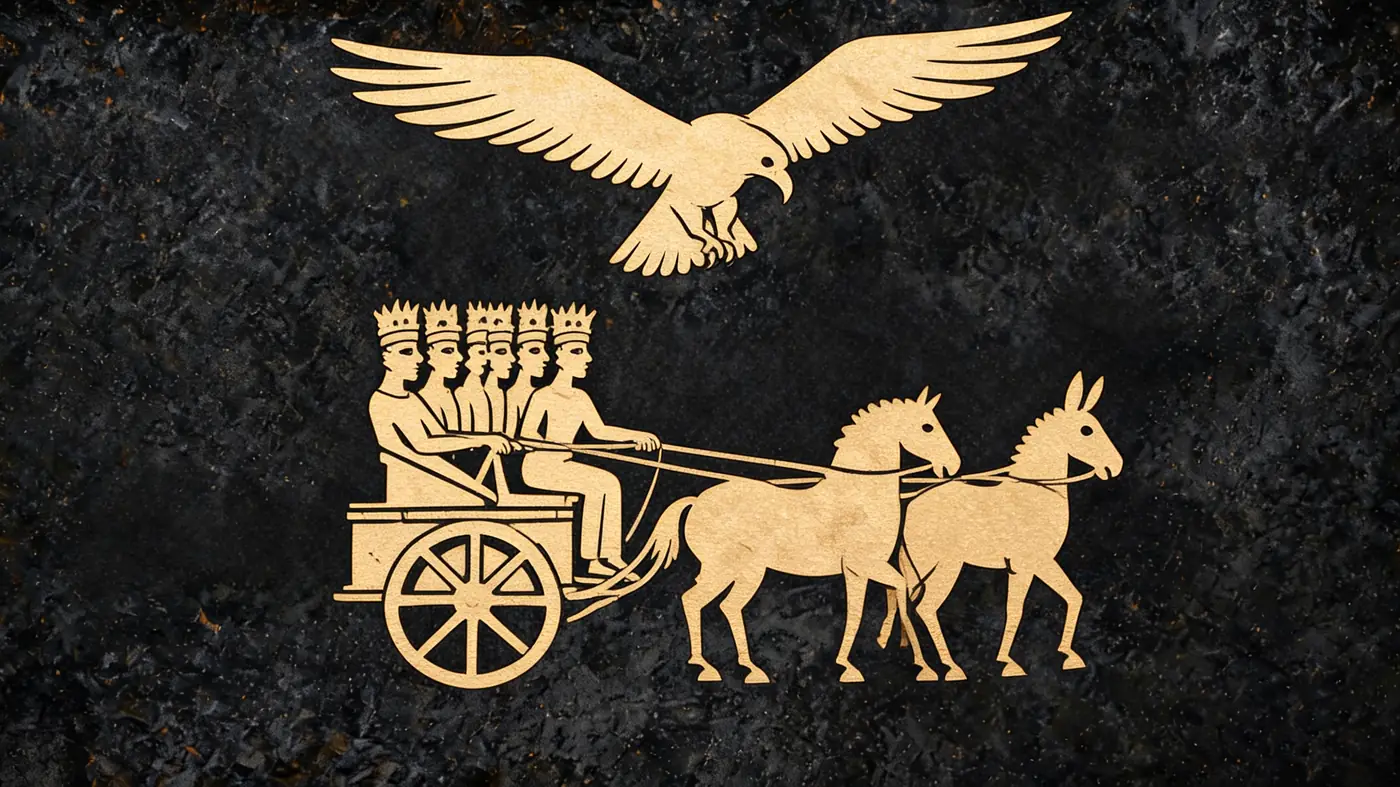
Jatayu was not an ordinary bird. He was the son of Aruna, the charioteer of Surya, the Sun God — the divine being who drove the celestial chariot across the sky each day so that light could reach the world. His mother was Shyeni, a celestial bird of immense power. His elder brother was Sampati, the king of vultures, whose own story of sacrifice would mirror Jatayu’s in ways neither brother could have foreseen.
In their youth, the two brothers once flew toward the sun itself. Sampati, the elder, soared higher, shielding Jatayu beneath his wings as the heat intensified. The sun scorched Sampati’s wings and he fell to earth, crippled for the rest of his life. Jatayu survived because his brother protected him. That act of fraternal sacrifice — an older brother burning so that a younger one could live — set the template for Jatayu’s own life. He learned what selfless protection looked like not from scripture, but from the smell of his brother’s burning feathers.
Jatayu grew old. Immensely old. By the time the events of the Ramayana unfold, he is described as ancient, vast, and weary — a being who has lived through ages of the world and watched civilisations rise and fall from the canopy of the sky. He had settled in the Dandaka forest, the dense wilderness of central India where Rama, Sita, and Lakshmana would spend the years of their exile.
It was there that Jatayu’s path crossed with Dasharatha, king of Ayodhya and father of Rama. The two became friends — not allies of convenience, but genuine companions bound by mutual respect. A king of men and a king of vultures, age and honour the only things they had in common. When Dasharatha’s sons were exiled to the forest, Jatayu considered it his sacred duty to watch over them. Not because anyone commanded him to. Because his friend’s children were in the wilderness, and he had given his word.
THE ABDUCTION
The moment that defines Jatayu arrives without warning.
Ravana, the ten-headed king of Lanka, had set his obsession on Sita. Using the golden deer — the shape-shifting demon Maricha — as a decoy, he lured Rama and Lakshmana away from their hermitage. When Sita was alone, Ravana revealed himself. He seized her by force, dragged her into his aerial chariot, the Pushpaka Vimana, and rose into the sky.
Sita screamed. She called out for Rama, for Lakshmana, for anyone who could hear her. The forest below was indifferent. The sky was empty.
Except for Jatayu.
The old vulture king was resting when he heard her cries. He looked up and saw Ravana’s chariot blazing across the sky, and he recognised the woman inside it — the wife of his friend’s son, the princess he had sworn to protect. There was no calculation in what happened next. No weighing of odds. No strategic assessment of whether an ancient bird could defeat the most powerful demon king in the three worlds.
He simply rose. He spread his vast, ageing wings and flew into the path of Ravana’s chariot.
THE BATTLE IN THE SKY
What followed was not a battle between equals. It was never meant to be. Jatayu knew what Ravana was. He knew the demon king had defeated gods, had shaken Mount Kailasa, had earned boons from Brahma that made him nearly invincible. Jatayu was old, mortal, and armed with nothing but talons, a beak, and a fury born from righteousness.
He attacked anyway.
Jatayu struck at Ravana’s chariot. He tore at the canopy with his talons, shattered the flagstaff, killed the demonic charioteer. He ripped into the horses that drew the Pushpaka Vimana and sent Ravana tumbling from his seat. For a time — an astonishing, impossible time — the old vulture held his own against the lord of Lanka. He fought with a ferocity that stunned Ravana, who had conquered celestial armies but had never faced anything like this: an opponent who was weaker, who was dying, and who refused to stop.
Sita watched from within the chariot, weeping and calling out Jatayu’s name, urging him to save himself. But Jatayu did not retreat. He could not. The promise he had made was not conditional. It did not include a clause for self-preservation.
Ravana drew his sword — the crescent blade that had cut down warriors and gods alike. He severed Jatayu’s wings. The great bird, his body broken, his feathers scattered across the sky like falling prayers, tumbled to the earth below. He crashed into the forest floor, bleeding and shattered, but alive. Barely alive. Alive long enough.
THE LAST WITNESS
When Rama and Lakshmana returned to the hermitage and found Sita gone, they searched the forest in desperation. They found blood on the ground. They found broken branches and scattered ornaments that Sita had dropped as markers during her abduction. And then they found Jatayu.
The old vulture lay on the forest floor, his massive body broken, his severed wings spread across the earth like the ruins of a temple. He was dying. He had been dying since the moment he chose to fight. But he had held on — clung to life with the same stubbornness with which he had clung to Ravana’s chariot — because he had one thing left to do.
He told Rama everything. The direction Ravana had flown. The name of the abductor. The route south toward Lanka. In his final breaths, Jatayu gave Rama the only gift that mattered: information. Without Jatayu’s testimony, Rama would have searched blindly, not knowing who had taken Sita or where she had been carried. The entire trajectory of the Ramayana — the alliance with Sugriva, the march to Lanka, the great war — began with a dying bird’s last words.
Rama cradled Jatayu as the old vulture king breathed his last. And then Rama did something extraordinary. He performed Jatayu’s funeral rites himself — the same rites a son performs for a father. He lit the pyre. He spoke the mantras. He gave Jatayu the honour of a departed parent, not a fallen servant or an animal ally.
In that gesture, Rama elevated Jatayu’s sacrifice to the highest plane of dharma. This was not a pet mourned by its owner. This was a father figure honoured by a prince who understood that blood is not the only bond that makes a family.
THE MEANING OF JATAYU
Jatayu’s story is, on its surface, a story of failure. He did not save Sita. He did not defeat Ravana. He did not survive. By every measurable standard of success, he lost.
And yet the Ramayana does not treat him as a failure. It treats him as one of the epic’s greatest heroes — a being whose sacrifice was not diminished by its outcome but made sacred by it. Jatayu is proof that dharma is not about winning. It is about choosing. It is about rising when every rational voice tells you to stay down, about fighting when you know the fight is unwinnable, about keeping a promise even when the cost of keeping it is your life.
The Hindu tradition reveres Jatayu not because he succeeded, but because he did not let the certainty of failure become an excuse for inaction. He is the answer to every moment in life when the right thing to do is also the thing that will destroy you — and you do it anyway.
There is a temple dedicated to Jatayu in Chadayamangalam, Kerala — the Jatayu Earth’s Centre — built at the spot where, according to local tradition, the wounded bird fell to earth. It features one of the largest bird sculptures in the world, carved into the rock of a hilltop, wings broken, body fallen, eyes still open. Still watching. Still bearing witness.
SAMPATI — THE BROTHER’S ECHO
Jatayu’s story does not end with his death. It echoes forward through his brother.
Sampati, the elder vulture king who had lost his own wings shielding Jatayu from the sun decades earlier, had lived in isolation ever since — grounded, crippled, unable to fly. When Hanuman and the Vanara army reached the southern coast searching for Sita, it was Sampati who told them that she was held captive in Lanka, across the sea. His extraordinary vision, honed over years of watching the horizon from his cliffside exile, allowed him to see what no one else could.
The brother who had sacrificed his wings to save Jatayu provided the intelligence that completed Jatayu’s mission. What the younger brother started with his body, the elder brother finished with his eyes. The symmetry is breathtaking — two brothers, separated by decades and tragedy, each giving what they had left in service of the same cause.
WHY JATAYU STILL MATTERS
Jatayu’s sacrifice strips away every comfortable illusion about heroism. He was not young. He was not powerful. He had no divine weapons, no celestial boons, no army behind him. He was an old bird with brittle bones and a promise he refused to break.
That is why his story endures. Not because it is extraordinary, but because it is recognisable. Every culture, every generation, every family has known someone who stood up when they didn’t have to, who fought when the outcome was already decided, who chose honour over survival — not because they were fearless, but because they understood that some things matter more than living.
The Ramayana is filled with divine interventions, celestial weapons, and acts of cosmic power. But Jatayu’s moment in the sky above the Dandaka forest, wings spread against a demon king’s chariot, is the moment that cuts closest to the human experience. Because it requires no divinity. It requires only the decision to rise.
The ancients understood that the measure of a life is not in its duration or its victories. It is in the moments when everything you have is not enough — and you give it anyway. Jatayu gave everything. And the sky remembers.
THE NEOLITHIC CONNECTION
Jatayu sits in our Vedic Legends collection, among the figures Hindu mythology remembers for what they chose rather than what they won.
The Last Fight — Jatayu Edition carries the broken circle across the chest: the wing that did not hold, and the refusal that did. The back is left bare.
— Neolithic Store
[…] Ravana was carrying Sita across the sky, a demon king with ten heads and no one in the three worlds willing to challenge him. Jatayu did. He was an ancient vulture king with no army, no divine weapon and no boon, only a refusal to watch injustice and do nothing. He attacked alone. Ravana severed his wings and Jatayu fell. He rises out of a broken ring of gold, one wing tearing free of the frame, across the chest, and the back is left bare. The wings fell. The legend did not.See the design · Read the story […]