KALKI — THE FINAL AVATAR WHO ENDS THE AGE
Ten times the world has gone wrong enough that Vishnu came down to set it right. Nine of those times, he came to save.
The tenth time is different. Kalki does not arrive to heal a broken age. He arrives to end it.
He is the only avatar still in the future — the promise Hinduism keeps for the moment things cannot be repaired, only replaced.
THE AGE THAT ROTS FROM WITHIN
Hindu cosmology turns through four ages, the yugas, each darker than the last. We are said to live in the final one — Kali Yuga, the age in which dharma stands on a single leg. Truth thins. Greed spreads. The strong eat the weak as a matter of course, and no one is surprised anymore.
The world of Kali Yuga does not end in fire sent from outside. It rots from within. Kalki is what the scriptures hold in reserve for the bottom of that decline — the point at which corruption becomes total and cannot be reformed, only cut away.
THE RIDER ON THE WHITE HORSE
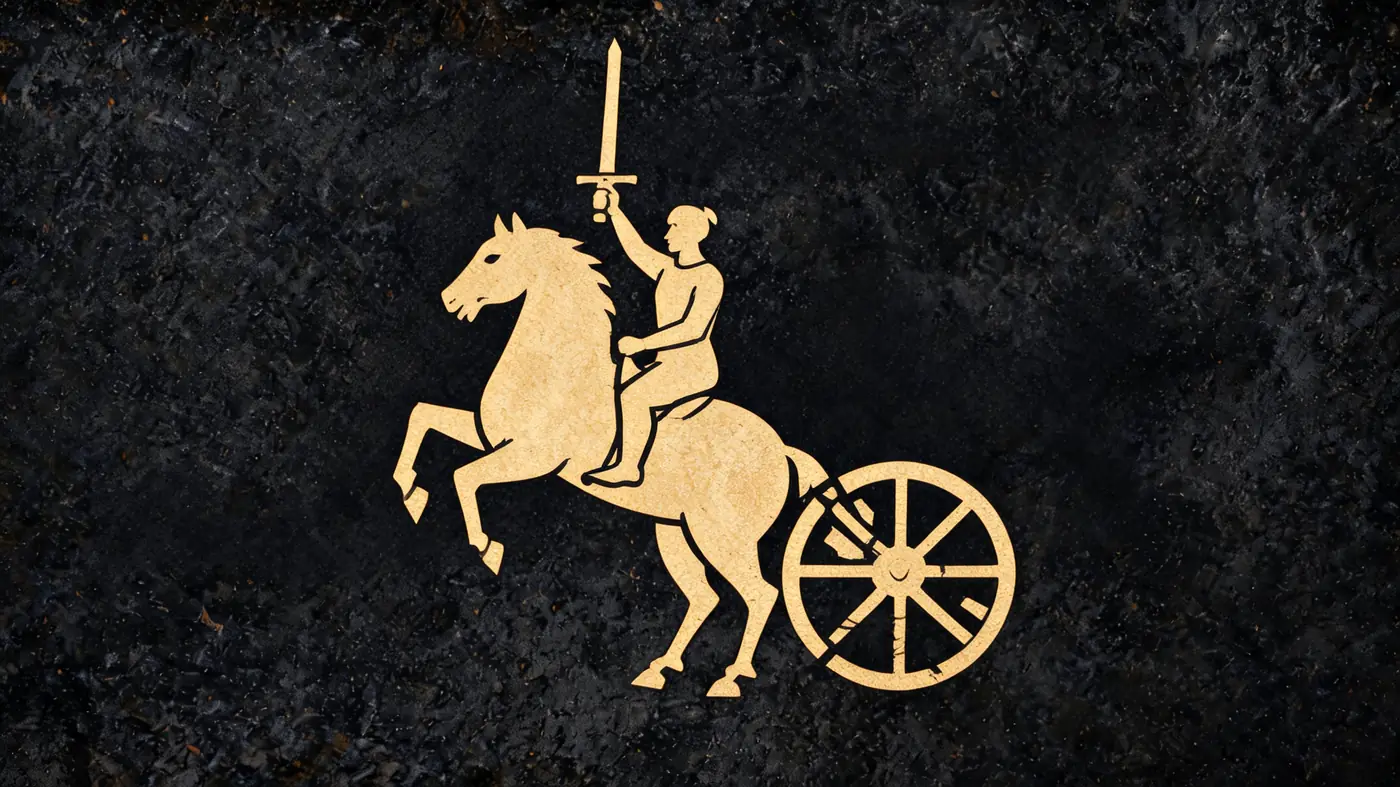
The Kalki Purana describes him without softness: a figure on a white horse named Devadatta, a blazing sword in his hand, moving across the ruined world like a comet that has chosen a direction.
He carries no lotus, no flute, no promise of comfort. Where Rama came with a bow and Krishna came with counsel, Kalki comes with an edge — a blade meant for one purpose: to cut the age off at the root.
DEVADATTA, THE HORSE THAT ARRIVES FIRST
Before the sword is drawn, the horse is already at a gallop. In the Kalki Purana the white horse is named Devadatta, and the name means “god-given.” He is not scenery. He is the means by which the tenth avatar crosses a ruined world, fast enough that the end looks like weather.
Every avatar before arrived by birth, by a lion’s roar, by a boat in a flood. Kalki arrives on horseback, and the horse is white — the colour the tradition keeps for what is untouched by the age it is about to end. The rider is the verdict. Devadatta is the road to it.
NOT A HEALER. A SWORD.
Every other avatar negotiates with the world. They teach, they warn, they give the age one more chance to correct itself. Kalki does not negotiate, because by the time he arrives, negotiation has already failed a thousand times over.
The mercy is in the ending itself. A corrupted age is not worth prolonging, and Kalki is the recognition of that — not cruelty, but a refusal to let a dead thing keep walking.
THE END THAT IS ALSO A BEGINNING
The destruction is not the point. It is the clearing. When Kalki finishes, the Kali Yuga is over, the wheel turns, and the cycle begins again at Satya Yuga — the age of truth, the world washed back to its first clean state.
He is the reset the universe keeps for itself. To split the skull of the old world is to let a new one bleed through.
THE NEOLITHIC CONNECTION
In the Vedic Legends collection, this is The Horse Comes First.
The back carries Devadatta: the white horse in a gold harness at full stride, a gold ring burning behind him like an eclipse. The chest carries only Kalki’s eyes, in gold, open in the dark. Ink, bone-white and gold on black.
No words anywhere on the print. The horse and the eyes are the sermon.
Available now at neolithicstore.com.
Forged from ancient bloodline. Worn by the modern warrior.
Neolithic Store is a premium mythology-inspired streetwear brand rooted in the stories that shaped human civilization. Every design begins with research, every piece carries a story, and every stitch is made for those who wear their beliefs on their skin.
[…] At the end of Kali Yuga, when the world chokes on its own corruption, the tenth avatar of Vishnu descends. Not as a healer or a shepherd. As a sword, on a white horse named Devadatta. Kalki does not arrive to save. He arrives to end the old age and let something new through. The back carries Devadatta at full stride before a gold eclipse. The chest carries only Kalki’s eyes, in gold.See the design · Read the story […]
[…] Vishnu holds the Sudarshana wheel, the cycle of the ages turned into a weapon, and the cycle ends the same way every time: with Kalki, the tenth avatar, riding the white horse out of the dark with the sword that ends the age. The horse of Time and the horse of the last avatar are the same horse. (Read: Kalki — The Final Avatar Who Ends the Age.) […]